

Accounting is the system through which a business records, measures, and reports its financial activity. Virtually every significant business decision, whether it concerns recruiting an employee, adjusting prices, or applying for finance, relies on accounting information to establish what is actually happening to the company’s finances. Without accurate and properly maintained accounts, a business has no dependable means of determining whether it is generating a profit, experiencing a cash-flow shortage, or achieving genuine growth.
That is the basic premise. The relationship between business and accounting is considerably broader, however, and it is worth understanding if you run a business. Accounting provides the financial evidence needed to assess the company’s position, judge the consequences of particular decisions, and determine what needs to happen next. In practice, this relationship underpins a large proportion of the financial decisions a business makes.
Why Accounting is called “The Language of Business”
You will often hear accounting described as “the language of business”, and the expression is fairly accurate. A business can generate thousands of financial transactions, from sales and purchases to payroll, rent, and loan repayments. Taken individually, these transactions provide little sense of the overall financial position. Accounting gives them structure by recording and organising them in a consistent form that can be interpreted by different parties, including business owners, banks, investors, and tax authorities.
That is essentially what financial statements do. A balance sheet, income statement, or cash flow statement takes the underlying financial activity of a business and translates it into a standardised form that can be understood by people with different roles and interests.
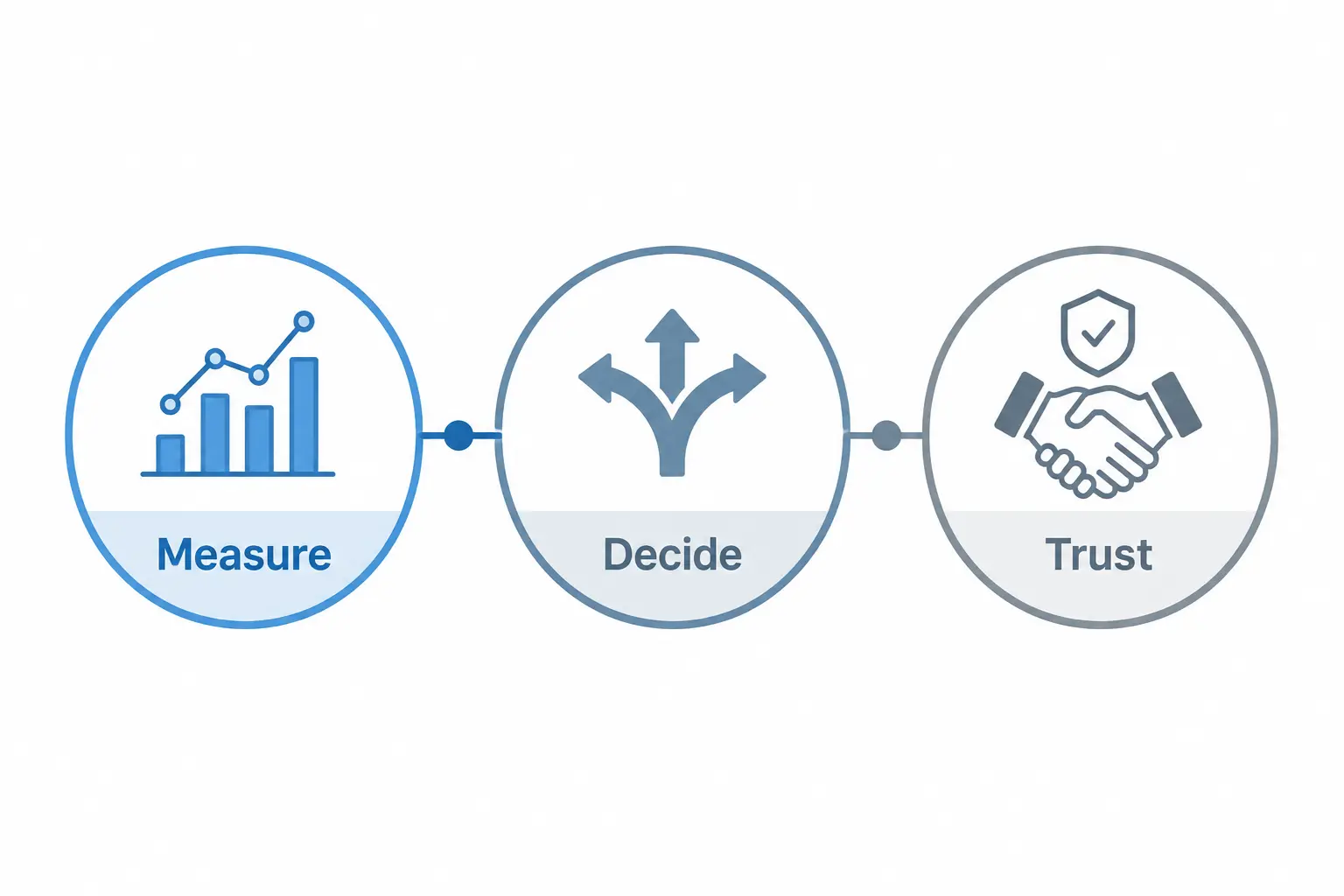
The 3 Ways Accounting and Business Connect
1. Accounting measures what the business is doing
Every business needs a clear understanding of its financial position. Accounting provides that understanding through measurable financial information: how much revenue the business has generated, what it has cost to generate that revenue, what it owes, and what it owns. This is not merely administrative bookkeeping. It is the most reliable means of establishing whether the business is actually performing as expected.
A founder may have the impression that sales are strong. The accounts can either substantiate that impression or reveal that the reality is quite different.
2. Accounting shapes the decisions the business makes
Once reliable financial information is available, it becomes the basis for a wide range of business decisions. Should the company recruit another employee? Can it afford to purchase new equipment? Is a particular client genuinely profitable once the time and resources required to serve them have been taken into account? These are business questions, but accounting data provides much of the evidence needed to answer them.
This is where accounting extends beyond its traditional role as a compliance function and becomes a decision-making tool. A business that treats accounting solely as a means of meeting its tax obligations is overlooking much of its practical value. The same financial information used to satisfy a tax authority can reveal which product line is underperforming, which is generating the strongest returns, and where the business should concentrate its resources.
3. Accounting builds trust with people outside the business
A business does not operate in isolation. Investors generally want to examine a company’s financial statements before committing capital. Banks may require financial information before approving finance, while suppliers may request evidence of financial stability before agreeing to favourable credit terms. Accounting gives these external parties a consistent basis on which to assess the financial position of a business when they have no direct access to its underlying operations.
Audits exist for much the same reason. They provide an independent examination of a company’s financial information and give external users greater confidence that the figures presented are accurate and fairly stated. That credibility can have practical consequences: for a business seeking investment or finance, the difference between figures that others can trust and figures that they cannot may determine whether funding is secured at all.
Functions of Accounting in a Business
Accounting encompasses a broader range of activities than many people initially expect. Depending on the size and complexity of the business, some or all of these functions may be carried out each month:
- Recording financial transactions as they occur through bookkeeping
- Preparing financial statements
- Developing budgets and financial forecasts
- Monitoring cash flow to ensure that the business has sufficient funds to meet its obligations
- Ensuring compliance with applicable tax legislation
- Safeguarding assets by maintaining accurate records of what the business owns
- Providing financial information to support decisions concerning pricing, recruitment, and investment
In a small business, these functions are often managed informally, sometimes by a single person who handles everything using a spreadsheet. Larger organisations are more likely to distribute these responsibilities across specialised departments or teams. The underlying functions, however, remain broadly the same. What changes is who is responsible for carrying them out and how formally the work is organised.
Financial Accounting vs. Management Accounting
The distinction between financial accounting and management accounting can be confusing, particularly for business owners who encounter both terms without a clear understanding of how they differ. The simplest way to distinguish them is to consider who the information is intended for, what it produces, and how it is used.
| Aspect | Financial Accounting | Management Accounting |
| Primary audience | External parties, such as investors, lenders, and tax authorities | Internal users, primarily owners, managers, and other decision-makers |
| Main output | Formal financial statements, including the balance sheet, income statement, and cash flow statement | Internal reports, budgets, forecasts, and other financial analyses |
| Time perspective | Primarily retrospective, focusing on transactions and financial performance that have already occurred | Primarily forward-looking, focusing on expected performance and future business decisions |
| Legal requirement | Generally required to meet tax, statutory, and regulatory obligations | Generally not required by law and used primarily for internal planning and decision-making |
Both forms of accounting rely on the same underlying financial records. The distinction lies mainly in who uses the information, how it is presented, and what purpose it serves. Financial accounting is concerned largely with communicating a business’s financial position and performance to external parties, whereas management accounting is used internally to support planning, control, and business decisions.
How Cloud Accounting Technology Is Changing the Relationship Between Business and Accounting
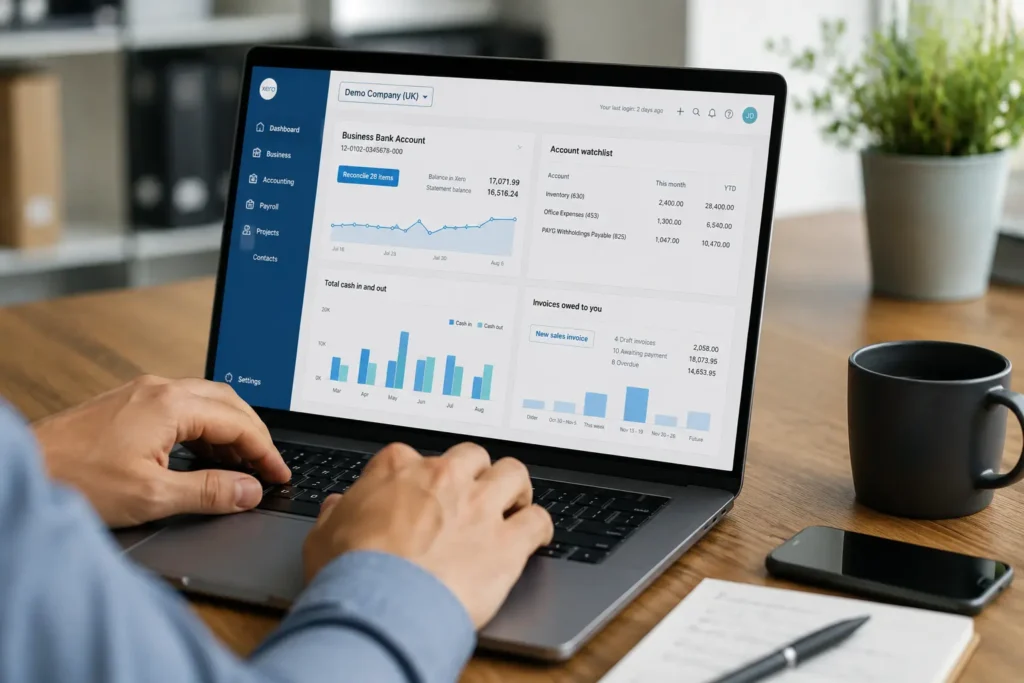
A decade ago, many small businesses managed their accounts using spreadsheets or paper ledgers, with records sometimes updated only once a month. That has changed considerably. Cloud-based accounting platforms such as QuickBooks and Xero can now provide up-to-date financial information, while automation can take care of much of the routine data entry that previously consumed hours of administrative work each week.
The practical consequence is that accounting has moved closer to the centre of day-to-day business decision-making. A business owner can assess the company’s cash position today instead of waiting for the accounts to be finalised at the end of the month. This is particularly relevant to small businesses, where cash-flow difficulties are a common cause of failure and can often be identified earlier when financial information is readily accessible.
How Real-Time Accounting Supports Small Business Decision-Making
Suppose a business is considering taking on a new client who has requested a discounted rate in return for a substantial volume of work. Without reliable accounting information, the decision may depend largely on intuition. With accurate financial data, the business can calculate the actual cost of servicing the client, compare that cost with the discounted revenue, and determine whether the arrangement is genuinely profitable or is likely to result in a loss.
That is the relationship in practical terms. Accounting does not run the business, but it provides the financial information needed to assess whether the decisions being made are actually producing the expected results.
Frequently Asked Questions About Business and Accounting
What is the relationship between business and accounting?
Accounting is the system through which a business records, measures, and reports its financial activity. It provides owners, managers, investors, lenders, and other external parties with financial information that can be used to support decisions, meet regulatory and tax obligations, and establish confidence in the business’s financial position.
Why is accounting called the language of business?
Accounting is often described as the language of business because it converts a business’s financial transactions into a standardised form, principally through financial statements. This allows different users to interpret a company’s financial position and performance using a common set of principles, regardless of the size or nature of the business.
What’s the difference between financial and management accounting?
Financial accounting is primarily concerned with producing formal financial statements for external users, such as investors, lenders, and tax authorities. Management accounting produces internal reports, budgets, forecasts, and analyses that help owners and managers make decisions about the future. The two functions use the same underlying financial records, but their intended users and purposes are different.
Do small businesses need both types of accounting?
Not necessarily in a formal sense. Most small businesses are required to maintain financial records and meet their tax obligations, whereas management accounting is primarily an internal function. Even so, simple management-accounting practices, such as reviewing a monthly budget against actual results, can provide useful information for controlling costs, planning expenditure, and making decisions about the future of the business.
Need help establishing accounting systems that support your business decisions rather than simply meeting your tax obligations? M&M Finance Advisory can assist with bookkeeping, virtual CFO services, and financial planning tailored to the way your business operates.